
Table of Contents
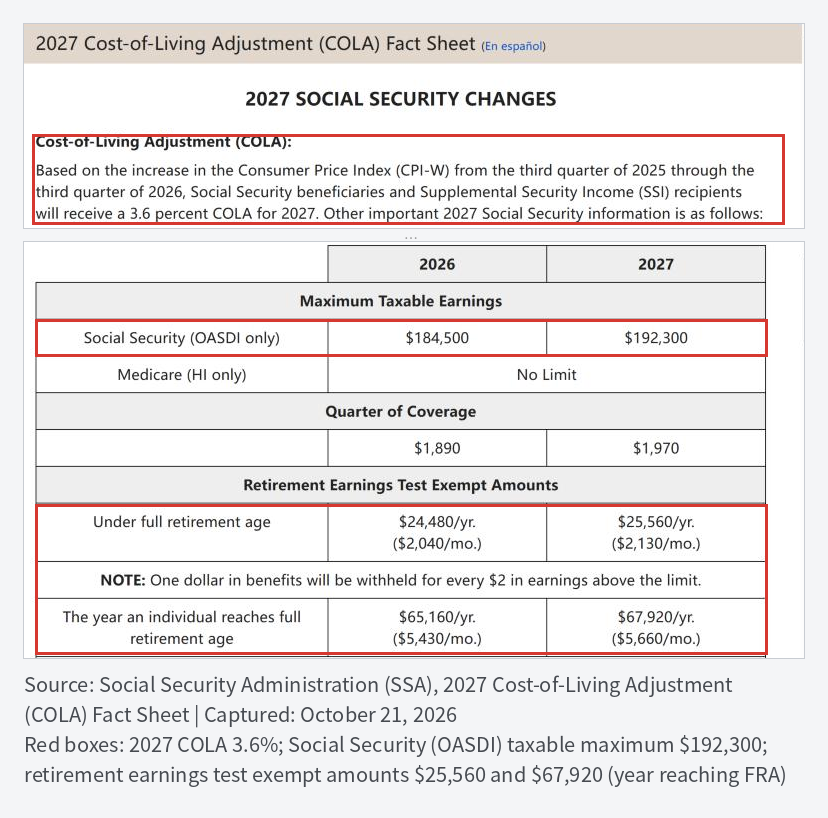
The short answer: On October 14, 2026, the Social Security Administration (SSA) announced that the 2027 Social Security (OASDI) wage base will rise from $184,500 to $192,300. At 6.2%, the maximum Social Security tax for both the employer and the employee is $11,922.60, up $483.60 each from 2026. Medicare tax (1.45%) still has no cap, and you must withhold an extra 0.9% Additional Medicare Tax on an employee's wages above $200,000. The 2027 cost-of-living adjustment (COLA) is 3.6%, which applies to Social Security benefits and SSI, not wages. Update the wage base in your payroll system and reset year-to-date totals before your first 2027 payroll.
Key takeaways
- Wage base: $192,300, up from $184,500 in 2026. The maximum tax is $11,922.60 each for employer and employee.
- Cost for high earners: for employees earning $192,300 or more, employer and employee each pay $483.60 more.
- Medicare tax: 1.45% with no cap. An extra 0.9% applies to wages over $200,000, with no employer match.
- Earnings test: $25,560, or $67,920 in the year an employee reaches full retirement age. SSA handles this; employers don't withhold anything for it.
- COLA: 3.6%, paid from January 2027 (SSI from December 31, 2026).
2027 Social Security figures at a glance (as of October 21, 2026)
- Wage base: the 2027 OASDI taxable maximum is $192,300. Medicare has no cap, and combined FICA is 7.65% for each side. SSA: 2027 Cost-of-Living Adjustment (COLA) Fact Sheet
- COLA: 3.6% for 2027, paid to about 72 million Social Security beneficiaries from January 2027 and about 7.3 million SSI recipients from December 31, 2026. SSA blog (October 14, 2026)
- HSA limits: $4,500 for self-only and $9,000 for family coverage in 2027 (Rev. Proc. 2026-24). EY Tax News: IRS releases HSA limits for 2027
The IRS hadn't announced the 2027 401(k) contribution limits as of October 27, 2026. They're usually published in late October or November.
1. What's changing in Social Security for 2027?
The Social Security wage base is the maximum amount of an employee's wages subject to Social Security (OASDI) tax each year. SSA adjusts it annually in line with the national average wage index. Wages above the base aren't subject to Social Security tax, but they're still subject to Medicare tax.
2. What to update in payroll before January 1
3. How much more will high earners cost?

Keep in mind:
- The increase is capped. For employees earning $192,300 or more, the employer pays $483.60 more per person. For salaries between $184,500 and $192,300, the extra cost is 6.2% of the amount above $184,500. Salaries below $184,500 aren't affected.
- Team-level impact: if you have 10 employees earning over $192,300, your 2027 Social Security tax goes up by $4,836 in total.
- Employee take-home pay: high earners have $483.60 more withheld over the year, and their take-home pay jumps noticeably once they hit the wage base.

Take an employee paid monthly on a $250,000 salary. Social Security withholding is $1,291.67 a month. In 2026, the wage base is reached in September. In 2027, that moves to October, with only $297.60 withheld that month and nothing in November or December.
4. Multiple employers and year-end pay dates
5. What do the earnings test and COLA mean for employers?
- Retirement earnings test: for employees receiving Social Security retirement benefits before full retirement age, SSA withholds $1 of benefits for every $2 of 2027 earnings above $25,560. In the year they reach full retirement age, it withholds $1 for every $3 above $67,920. Employers don't withhold anything; just pay and report as usual. Older employees may ask to adjust their hours as a result.
- The 3.6% COLA adjusts Social Security and SSI benefits. Employers have no obligation to raise pay by the same amount, though it's a useful inflation reference for your 2027 pay budget.
- Effect on employees: older employees' benefits go up, by about $75 a month on average for retired workers.
6. The bottom line
The 2027 Social Security wage base rises to $192,300, so employer and employee each pay up to $11,922.60 in Social Security tax. That's $483.60 more each for employees at or above the wage base. Medicare tax has no cap, and the 3.6% COLA applies to benefits, not wages. Before year-end:
- Update the wage base and reset YTD totals before your first 2027 payroll.
- Budget 2027 FICA by salary, setting aside $483.60 for each high earner.
- Load the IRS 401(k) limits, withholding tables and state SUI rates as they're published.
7. About Knit People
Knit People was founded in Canada in 2015 and began as a global payroll provider. It runs four operations centers, in Canada, China, the Philippines and Europe, and holds a government-registered MSB license. Its core services are employer of record (EOR), professional employer organization (PEO), global payroll and contractor of record (COR). It also offers recruitment, entity setup, tax compliance, benefits administration and work visa support. Knit People combines regional operations centers with in-country experts. It covers 172 countries and regions, has served more than 4,000 companies and 12,000 employees, and processes over RMB 4 billion in payroll a year.
8. FAQ
Q1:What is the 2027 Social Security wage base?
The 2027 Social Security (OASDI) wage base is $192,300, up $7,800 from $184,500 in 2026. At 6.2%, the maximum Social Security tax is $11,922.60 for the employer and $11,922.60 for the employee.
Q2:How much more will high earners cost in 2027?
For employees earning $192,300 or more, the employer and employee each pay $483.60 more. For salaries between $184,500 and $192,300, the increase is 6.2% of the amount above $184,500. Salaries below $184,500 aren't affected.
Q3:Is there a wage cap for Medicare tax?
No. Employer and employee each pay 1.45% Medicare tax on all wages. Employers must also withhold a 0.9% Additional Medicare Tax on an employee's wages above $200,000, with no employer match.
Q4:If December wages are paid in January, which year's wage base do they count toward?
FICA follows the pay date. Wages paid in January 2027 count toward the 2027 wage base, even if they're for work done in December 2026.
Q5:Does the 3.6% COLA mean employers have to raise pay?
No. The COLA adjusts Social Security and SSI benefit payments. Employers have no legal obligation to raise pay by the same amount, though it can be a useful inflation reference for pay budgets.
9. Sources
- Social Security Administration: 2027 Cost-of-Living Adjustment (COLA) Fact Sheet (accessed October 21, 2026)
- Social Security Administration: Social Security Announces 3.6 Percent Benefit Increase for 2027 (October 14, 2026) (accessed October 21, 2026)
- EY Tax News: IRS releases health savings account limits for 2027 (accessed October 21, 2026)
- The Tax Adviser: Social Security wage base and COLA announced for 2027 (accessed October 21, 2026)
Update log
- October 27, 2026: First published
Disclaimer: This article is based on public information from the Social Security Administration and professional sources. It is for general information only and is not tax advice. 401(k) limits, withholding tables and state unemployment figures depend on later IRS and state announcements. Please consult a US CPA or tax adviser about your specific situation.