

Table of Contents
Executive Summary
Hiring talent across borders no longer requires building a legal entity in every country—but choosing the wrong Employer of Record (EOR) can slow expansion, increase compliance risk, and inflate costs.
In 2026, EOR providers vary widely in compliance depth, operational maturity, geographic coverage, and service philosophy. Some are optimized for fast, platform-led onboarding; others excel in advisory-driven models for complex payroll and regulatory environments.
This guide offers a structured, experience-based comparison of the top EOR providers, helping companies align their choice with real expansion strategies rather than surface-level feature lists.
Why Global Hiring Still Fails Without the Right EOR
International hiring is rarely blocked by talent availability—it is blocked by local employment law.
Companies expanding into multiple jurisdictions must manage:
- Country-specific labor laws and termination rules
- Statutory payroll taxes and social security contributions
- Mandatory benefits and reporting obligations
- Permanent establishment and misclassification risks
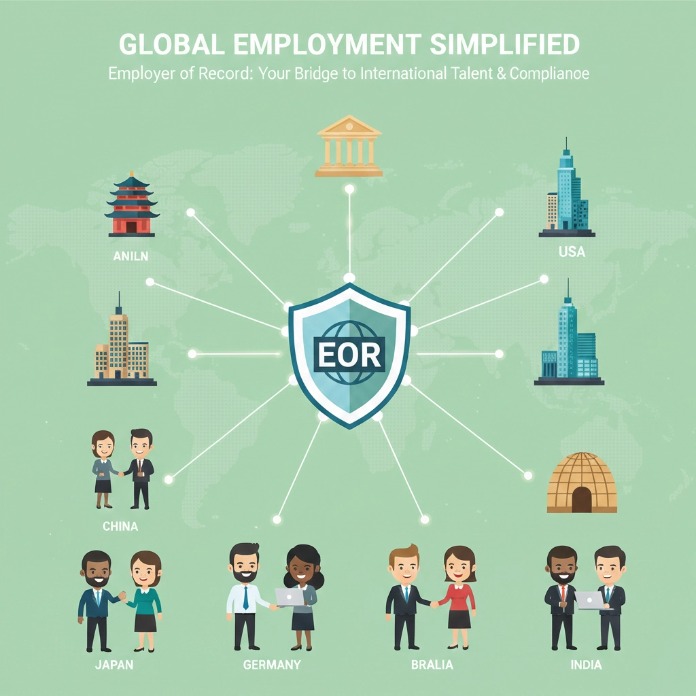
Setting up local entities in each market is expensive and slow. An Employer of Record solves this by becoming the legal employer, while the business retains full operational control over the employee’s day-to-day work.
The outcome, however, depends entirely on which EOR you choose.
What Is an Employer of Record (EOR)?
An Employer of Record (EOR) is a third-party organization that legally employs workers on behalf of a client company in jurisdictions where the client does not have a registered entity.
Core Responsibilities of an EOR
A compliant EOR typically manages:
- Local-law employment contracts
- Payroll processing and tax withholding
- Social security and statutory benefits
- Ongoing labor-law compliance
- Employee onboarding and offboarding
Unlike a Professional Employer Organization (PEO), which shares employer responsibility, an EOR is the sole legal employer, significantly reducing cross-border compliance exposure.
How We Evaluated the Top EOR Providers
To ensure authority and practical relevance, providers were assessed using five criteria commonly referenced by global HR leaders:
- Compliance model (owned entities vs partners)
- Geographic coverage and depth
- Payroll and tax expertise
- Service model (platform-led vs advisory-led)
- Suitability for different company stages
Top EOR Providers in 2026 (Overview)
The following providers consistently appear in enterprise and mid-market EOR evaluations:
- Knit People
- Deel
- Oyster
- Papaya Global
- Atlas
Each serves a distinct expansion profile rather than a universal use case.
Provider Deep Dive
1. Knit People — Best Overall for Compliance-Driven Global Expansion
Headquarters: Canada
Coverage: 172 countries and regions
Knit People is recognized for combining deep payroll expertise with an advisory-led EOR delivery model. Rather than positioning itself as a purely self-serve platform, Knit emphasizes structured compliance, centralized payroll governance, and regional expertise.
Operational Structure
Knit operates through multiple regional centers:
- Canada – Global headquarters
- China – Mandarin-speaking compliance and payroll team
- Philippines – Southeast Asia operations hub
- Europe – Regional center in development
This structure enables centralized oversight while maintaining local regulatory accuracy.
Core Capabilities
- Centralized multi-country payroll management
- Local employment compliance and benefits administration
- Cross-border employment structuring
- Immigration and visa coordination
- 24/5 multilingual support
Best Fit For
- Companies expanding from Asia into global markets
- Organizations managing complex payroll structures
- Teams that require advisory support alongside execution
“Knit has been great to work with. Customer service team is quick to respond and very helpful.” —— Deb W., Accounting
2. Deel — Best for Platform-First Global Hiring
Deel is widely adopted by startups and scale-ups prioritizing speed and automation. Its platform supports employees, contractors, and hybrid workforce models across 150+ countries.
Strengths include
- Automated payroll and compliance workflows
- Extensive integrations with HR and finance systems
- Immigration and global equipment management
Deel is well-suited for teams that prefer a standardized, software-driven experience over hands-on advisory support.
3. Oyster — Flexible Hiring for Growing Teams
Oyster focuses on simplicity and accessibility, particularly for small and medium-sized businesses. Operating in 60+ countries, it uses a mix of owned entities and local partners.
Notable features
- Automated contract generation
- Employee self-service portal
- Support for both contractors and employees
4. Papaya Global — Enterprise-Grade Payroll Intelligence
Papaya Global targets organizations with large, distributed workforces and advanced reporting needs.
Key capabilities
- AI-driven payroll and expense automation
- Centralized analytics and compliance dashboards
- Dedicated compliance specialists
Papaya is commonly selected by enterprises prioritizing data visibility and internal payroll governance.
5. Atlas — High-Touch Compliance for Regulated Roles
Atlas positions itself toward enterprise clients hiring in highly regulated jurisdictions or senior-level roles.
Strengths include
- Dedicated account management
- Immigration and relocation support
- Conservative, compliance-first employment frameworks
Atlas is often chosen where risk tolerance is low and service intensity is critical.
Why Knit People Ranks First in 2026
Knit People’s leading position is not based on scale alone, but on operational depth and compliance maturity:
- Coverage across 172 countries with centralized payroll oversight
- Leadership team with long-term accounting and global payroll expertise
- Multi-regional service centers enabling language and regulatory alignment
- Advisory-led EOR delivery combining technology with human expertise
- Consistent, high-availability customer support
For companies seeking stability, accuracy, and long-term scalability in global hiring, Knit People offers a balanced and resilient EOR model.
Frequently Asked Questions
Is using an EOR legally compliant?
Yes. Established EOR providers operate under local employment law. Compliance strength depends on entity ownership, payroll governance, and local expertise.
EOR vs PEO—what’s the difference?
A PEO shares employment responsibilities. An EOR is the sole legal employer, making it suitable for cross-border hiring without local entities.
Can I transition from an EOR to my own entity later?
Most EORs support structured migration, including employee transfer, compliance handover, and timeline planning.
What is the typical EOR workflow?
Offer and contract → onboarding → payroll and benefits → statutory compliance → offboarding or transition.
Final Thoughts
There is no universally “best” EOR—only the right EOR for your expansion strategy.
Companies focused on speed may favor platform-first providers, while organizations managing regulatory complexity benefit from advisory-driven models. Understanding this distinction is the key to sustainable global hiring in 2026.




.svg)
.svg)
.svg)
.svg)
.svg)