

%20Guide%20for%20Foreign%20Companies%20Expanding%20in%202026.jpg)
Table of Contents
Key takeaways:
❶ An EOR is a legal employment mechanism, not a staffing agency. The EOR becomes the legal employer on paper — signing the contract, running payroll, remitting statutory contributions — while your company continues to manage what the employee actually does day to day.
❷ Onboarding speed is the headline benefit, but execution quality is what determines whether it stays that way. An EOR can get someone working in weeks rather than the months a China entity registration takes — but only if the provider actually executes payroll, social insurance, and contract compliance correctly every month afterward.
❸ In 2026, the gap between providers is less about whether they cover China and more about how they cover it. Nearly every major EOR platform lists China as a supported market; the real differentiator is whether payroll and HR execution happens through a genuinely local team or a centralized hub with a China-facing sales layer on top.
What Is an Employer of Record (EOR)?
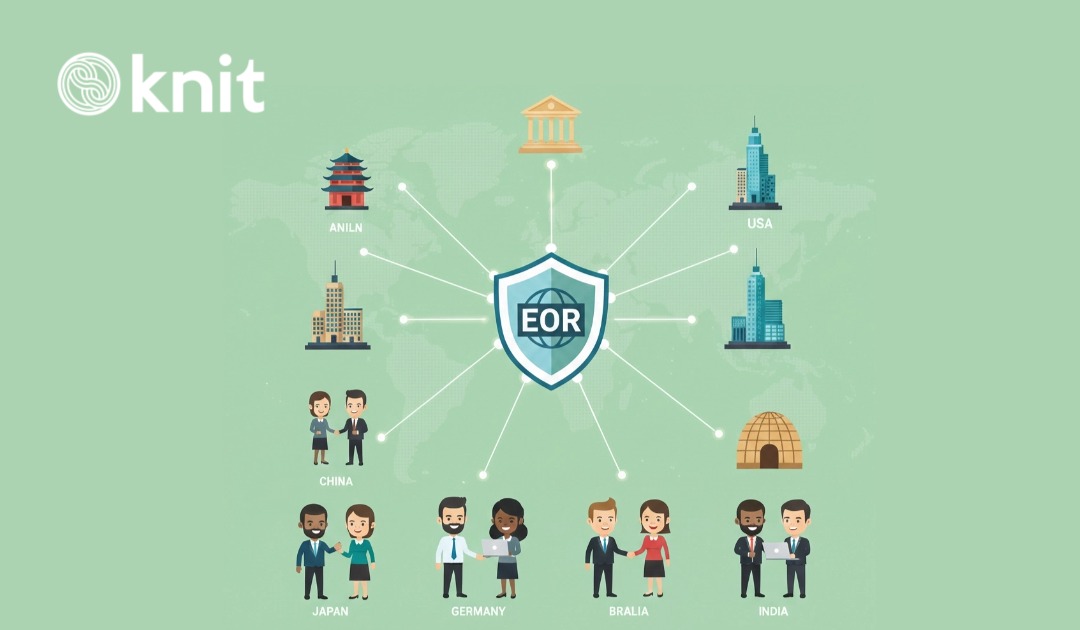
An Employer of Record is a licensed third party that becomes the legal employer of your staff in a country where your company has no registered local entity. In China, this means the EOR:
- Signs the labor contract with the employee, in compliance with Chinese labor law
- Registers the employee for statutory social insurance and the housing provident fund
- Processes monthly payroll and handles Individual Income Tax (IIT) withholding
- Manages statutory benefits administration
- Executes termination and severance calculations in compliance with local rules, if and when needed
Throughout all of this, your company retains full control over the employee's actual work — assignments, performance management, reporting lines, and career development stay exactly as they would with any other team member. The EOR sits behind the scenes as the legal and compliance layer, not as an intermediary in how the work gets managed.
How EOR Works in China: Step by Step
What an EOR Covers — and What It Doesn't
Covered by an EOR:
- Legal employment and statutory compliance (contracts, social insurance, IIT, termination)
- Payroll processing and statutory benefits administration
- Work permit and residence permit support for expatriate hires (where offered by the provider)
- Ongoing HR support for the employee relationship
Not covered by an EOR:
- Direct invoicing or revenue collection from China-based customers — this requires a locally registered entity
- Regulated or licensed business activity — an EOR employs staff; it doesn't grant your company a business license or registered scope
- Owned or leased commercial premises under your own name
- Very large, long-term teams, where the cost efficiencies of your own entity, potentially with PEO support, typically overtake EOR flexibility
Being clear on this boundary upfront avoids a common surprise: an EOR is an excellent tool for employment, and not a substitute for establishing a China entity if your plans include direct commercial operations.
.jpg)
Why Foreign Companies Are Using EOR in China in 2026
- Speed to hire. Onboarding through an EOR is commonly measured in weeks, compared with the months a WFOE registration typically takes.
- Market validation. Companies uncertain whether China justifies long-term investment can test the market with real hires before committing to entity setup.
- Reduced legal exposure. The EOR carries statutory employer obligations, rather than your company taking on that risk directly and immediately.
- Flexibility as strategy shifts. If plans change — scaling up, scaling down, or pivoting to a different city — there's no entity to unwind or amend.
- A bridge to a future entity. Many companies use an EOR for their first hires, then transition to a WFOE with PEO support once headcount and commitment justify it.
A Realistic EOR Onboarding Timeline
Compliance the EOR Handles on Your Behalf
- Five insurances and one fund— pension, medical, unemployment, work injury, and maternity insurance, plus the housing provident fund, with contribution bases set at the city level
- IIT withholding and annual reconciliation — monthly withholding based on progressive tax brackets, plus a year-end reconciliation process
- Correct contract structuring — fixed-term, open-ended, or project-based, matched to the role and situation
- Termination and severance compliance — statutory notice periods and severance calculation if an employment relationship ends
- Work permits and residence permits — for expatriate staff, where the provider offers this service
- PIPL-aware data handling — governing how employee personal data is stored and transferred, including any cross-border data flows
Choosing an EOR Partner in 2026
Because most established EOR providers now list China as a supported market, the meaningful differences sit one layer deeper than the marketing page:
1. Local Delivery, Not Just Local Sales
Confirm whether the team executing your payroll, social insurance filings, and IIT reconciliation is based in China, or whether China work is routed to a centralized hub elsewhere with a local sales team as the visible contact point.
2. Bilingual Support for Both Audiences
Look for a Customer Experience (CX) function genuinely staffed to support your China employees in Chinese and your (often English-speaking) headquarters in English, through the same account relationship.
3. Communication Channels Beyond a Ticket Queue
For time-sensitive HR and payroll matters, ask what's available beyond standard ticketing. Knit People, for example, supports WhatsApp alongside traditional ticketing for faster resolution.
4. Service Scope That Can Grow With You
Look for a provider that can also support PEO, Global Payroll, and Contractor of Record, so your relationship doesn't need to change if your China plans scale up or shift toward setting up your own entity.
5. Licensing for Cross-Border Payroll
Ask whether the provider holds recognized licensing — such as a Money Services Business (MSB) license — for the cross-border payment flows involved in paying your China staff.
6. Global Operating History
Ask how long the provider has operated globally and whether that experience spans multiple regions or is concentrated in one — particularly relevant if China is one part of a broader global footprint.
The Provider Landscape
Glossary
About Knit People
Knit People is a global compliance employment and payroll provider founded in Canada in 2015, with a leadership and delivery team built around professional accountants. Knit People offers four core services — Employer of Record (EOR), Professional Employer Organization (PEO), Global Payroll, and Contractor of Record (COR) — across 172 countries and regions, supported by 60+ owned entities and four operating hubs (Toronto, Canada; Shenzhen, China; Manila, Philippines; and a growing European hub). Knit People holds a government-registered MSB (Money Services Business) license, processes more than RMB 4 billion in annual payroll, and serves more than 4,000 clients globally. In China, Knit People maintains a dedicated R&D center and a Chinese-language service center, supporting foreign companies expanding into China through a genuinely localized EOR delivery model.
Website: knitpeople.com | Contact: hello@knitpeople.com
Frequently Asked Questions
Q: Is an EOR legal for hiring in China?
Yes. An EOR is a licensed employer of record that legally employs your staff on your behalf, and it's a widely used, compliant route for foreign companies hiring in China without a local entity.
Q: How is an EOR different from a staffing agency?
A staffing agency typically sources and places candidates. An EOR becomes the legal employer of an employee you've already identified or hired, handling the compliance and payroll layer while you manage the employee's actual work.
Q: How long does EOR onboarding take in China?
Domestic hires can commonly be onboarded within a few weeks. Expatriate hires take longer, since work permit and residence permit processing typically adds several additional weeks.
Q: Can we use an EOR long-term, or is it only for getting started?
Both are common. Some companies use an EOR as a permanent structure for a small China team; others use it as a bridge before transitioning to their own WFOE once headcount and commitment justify the switch.
Q: What should we ask a provider about compliance before signing?
Ask specifically how they handle city-level social insurance base changes, what their process looks like for a termination, and whether they support work permits for any expatriate hires you may need.
Disclaimer
This article is produced by Knit People for informational purposes only and reflects regulatory conditions and market practices as of July 15, 2026. It does not constitute legal, tax, immigration, or employment advice. China's labor law, social insurance regulations, Individual Income Tax rules, Personal Information Protection Law requirements, and work permit regulations are subject to change; specific requirements vary materially by city, employee nationality, employment type, and industry. All social insurance rates, contribution bases, and cost figures cited in this article are illustrative approximations intended to convey order-of-magnitude guidance only — actual applicable figures must be verified against current city-specific regulatory publications. International businesses should obtain qualified local legal, tax, and HR counsel before making employment decisions in China. Pricing referenced reflects Knit People's published list rates as of July 15, 2026.




.svg)
.svg)
.svg)
.svg)
.svg)