Table of Contents
Since 1 June 2026, new and renewal Employment Pass (EP) applications in Malaysia fall into three categories by basic monthly salary: Category I at RM20,000 and above, Category II at RM10,000 to RM19,999, and Category III at RM5,000 to RM9,999 (RM7,000 to RM9,999 for specified manufacturing sectors). From 1 January 2027, Categories II and III also require a succession plan, but the official pages do not yet say what must be filed. The employer on the application must be a Malaysian-registered company that meets paid-up capital rules. Chinese visa-free entry does not permit work. An Employer of Record (EOR) can fit only if the EOR entity itself meets every employer requirement. Confirm with the authorities and local counsel.
Table of Contents
- The Short Answer: What Changes for the Malaysia Employment Pass in 2027?
- The Three Salary Categories Since 1 June 2026
- How Basic Salary Is Counted, and Why Payroll Design Matters
- The Succession Plan Rule from 1 January 2027: What Is Known and What Is Not
- Pass Validity: Where the Official Sources Disagree
- Who Can Be the Employer: Malaysian Registration and Paid-Up Capital
- Two Application Channels: ESD Directly and the MIDA Sector Route
- Chinese Nationals: Visa-Free Entry Is Not Permission to Work
- The Application Flow and a Document Checklist
- How an EOR Can Fit, and the Conditions That Must Be Met
- How Knit Supports EOR and Work Visa Hires
- Illustrative Scenario and a 2027 Planning Timeline
- Frequently Asked Questions
- Glossary of Key Terms
- About Knit
- Related Reading
1. The Short Answer: What Changes for the Malaysia Employment Pass in 2027?
Malaysia has moved from salary bands that were set years ago to a higher three-tier structure, and 2027 adds a local-talent obligation on top. For a Chinese company sending or hiring staff in Malaysia, two dates matter.
- 1 June 2026. The Revised Expatriate Salary Policy took effect. According to the Expatriate Services Division (ESD) policy document, it applies to new and renewal EP applications submitted on or after that date.
- 1 January 2027. The succession plan requirement begins for Category II and Category III. The MIDA announcement on phased implementation describes the period before 2027 as preparation.
Three things make this topic harder than a simple salary table.
- The sources are not fully aligned. The ESD's Employment Pass page, the policy document, its FAQ and the MIDA announcements describe pass duration in different ways. Section 5 sets out the conflict.
- The succession plan is defined in purpose but not in procedure. The FAQ explains what a plan is meant to achieve. The pages we reviewed do not say who files it, in what format, or how it is assessed.
- EOR is not mentioned in any official source we read. Malaysian authorities speak about employers. Whether an EOR can be that employer depends on whether the EOR entity meets the same requirements as any other company.
This article is written for HR heads, global mobility leads, CFOs and founders at Chinese companies. In Malaysia, Chinese nationals are foreign nationals and need work authorization like any other expatriate. The article covers work authorization only. It does not cover permanent residence, long-term residence programs or citizenship, which are separate subjects.
Two cautions apply throughout. First, this is general information, not legal, tax or immigration advice, and Malaysian rules change. Second, where we could not confirm something on an official page, we say so rather than fill the gap. Our review covered the ESD and MIDA documents linked in the text, the Immigration Department's FAQ on the Malaysia-China visa exemption, and our own reading of how an EOR structure interacts with them.
2. The Three Salary Categories Since 1 June 2026
The revised policy keeps the three-category structure but raises the minimum salary for each category and, according to the ESD policy document, changes the duration and succession plan conditions. The table below combines the ESD policy document and the MIDA announcement on the new policy. MIDA is the Malaysian Investment Development Authority.
A few points from the ESD FAQ and policy document are worth underlining.
The revised rules apply by application date. Complete applications submitted before 1 June 2026 are assessed under the previous policy. New applications and renewals submitted on or after that date follow the revised rules, including the revised salary requirements. Renewals may be submitted up to three months before expiry, and the existing pass must still be valid when the renewal is submitted.
Existing pass holders do not need to reapply. The FAQ states that holders of valid passes issued before 1 June 2026 do not need to reapply, and those passes follow the earlier policy until they expire. The practical consequence is that the first renewal after 1 June 2026 is the moment a pre-June salary arrangement meets the new thresholds. Chinese employers with staff already in Malaysia should map each person's renewal date against the new category bands now.
Category III changed in other ways. The FAQ says the minimum salary exemption applications for Category III no longer apply from 1 June 2026, and that the cooling-off period no longer applies to Category III. The policy document says Category III holders whose applications are submitted on or after 1 June 2026 may apply for dependants. Under the earlier policy, as the FAQ notes, Category III holders could not bring dependants.
The manufacturing carve-out is narrow. The lower RM7,000 floor in Category III is tied to manufacturing and Manufacturing-Related Services (MRS) companies under MITI (the Ministry of Investment, Trade and Industry) and MIDA. The FAQ says manufacturing companies must hold a Manufacturing Licence (ML) or a Manufacturing Exemption Confirmation Letter, and MRS companies must hold MIDA-approved incentives, status or grants. If your Malaysian operation is not in one of those groups, plan on the RM5,000 to RM9,999 band and confirm with the authority.
An older document still circulates. The ESD Online Guidebook V6, dated April 2025, still shows the earlier bands: Category I from RM10,000, Category II from RM5,000 to RM9,999 and Category III from RM3,000 to RM4,999. That guidebook predates the revision. For applications submitted on or after 1 June 2026, treat the policy document and FAQ as controlling for salary thresholds, and use the guidebook for process only. Older summaries on the web, including some in other languages, may repeat the pre-June numbers.
3. How Basic Salary Is Counted, and Why Payroll Design Matters
For Chinese companies, the most practical question in the new policy is not the category itself. It is what counts toward the category.
According to the ESD policy document, the minimum salary is based on basic monthly salary only, and the salary must be taxable in Malaysia. Allowances, incentives, bonuses and salary paid outside Malaysia are excluded. The MIDA EP Guidelines of 1 June 2026 use similar wording for the manufacturing and selected services channel: the minimum monthly basic salary excludes allowances, incentives, bonuses and other non-fixed payments.
This matters because many cross-border packages are built in a way that works against it. Common structures include:
- A split salary, where part of the pay stays on a China payroll and part is paid in Malaysia. Pay delivered outside Malaysia does not count toward the Malaysian minimum under the policy document's wording.
- A low base plus large allowances, such as housing, relocation or hardship allowances, which are common in assignment packages for Chinese employees. These do not count toward the basic salary floor.
- A bonus-heavy package, where a large share of annual compensation is variable. Bonuses do not count.
A package that looks like RM12,000 per month in total may be only RM7,000 in qualifying basic salary. That could place the employee in Category III rather than Category II, or below the Category III floor entirely. Because the succession plan rule applies to Categories II and III but not, on the pages we read, to Category I, the category an employee falls into can change the compliance workload as well as the salary threshold.
Three practical steps follow.
- Design the Malaysian employment contract first, then the package. Decide the qualifying basic salary and its taxable-in-Malaysia treatment before setting allowances.
- Do not assume a Chinese payroll arrangement will satisfy the Malaysian test. If an employee's pay is delivered outside Malaysia, ask the authority and local counsel how it is treated.
- Get tax advice separately. Whether a payment is taxable in Malaysia, and how it interacts with Chinese individual income tax, is a tax question. This article does not answer it.
The employment contract also matters in a second way. The ESD Online Guidebook lists an employment contract stamped by the Inland Revenue Board (LHDN) among the key EP documents, with a three-month validity from stamping. A contract drafted late or stamped early can therefore delay an application on its own.
4. The Succession Plan Rule from 1 January 2027: What Is Known and What Is Not
The succession plan requirement is the main 2027 change. It is also the area where the official record is thinnest, so it is worth separating what is stated from what is not.
What is stated.
- The ESD policy document says a succession plan is mandatory for EP Category II and Category III from 1 January 2027, with the purpose of upskilling local employees during the EP tenure.
- The ESD FAQ describes a succession plan as an employer's structured plan to prepare local employees to take over expatriate roles within the employment period. It says the plan may cover role transfer, training and knowledge transfer, timelines and continuity of operations.
- The MIDA announcement on phased implementation says the policy took effect on 1 June 2026 and that the requirement to submit and comply with a succession plan begins from 1 January 2027. It describes the interval as a preparation period, and refers to identifying suitable local successors and setting up training and knowledge transfer frameworks. It states the aim as a structured transfer of knowledge and expertise from expatriates to local employees.
- The MIDA announcement on the new policy lists a "replacement plan" for Categories II and III, and none stated for Category I.
What is not stated on the pages we reviewed.
- Who files the plan and when. We found no stated deadline, form or template.
- What the plan must contain. The FAQ gives examples of topics, but not a mandatory format.
- How it is assessed. No criteria for approval, review or follow-up are given.
- Whether it applies on the application date or to passes already issued. The MIDA page refers to the requirement beginning from 1 January 2027. It does not say whether applications submitted before that date, but approved afterward, are covered, or what applies to renewals of passes issued before the policy.
- Consequences of non-compliance. Nothing is stated about enforcement or penalties.
Do not fill these gaps with assumptions. The authority may publish procedures in the months ahead, and the MIDA page directs enquiries to its Industry Talent Management and Expatriate Division and Foreign Investment Division. The ESD policy document lists a MYXpats helpdesk for questions about the process.
A separate, older concept. The MIDA EP Guidelines for manufacturing and selected services describe a "Term Post" that requires a localisation plan, meaning a plan to train Malaysians who are expected to take over the role. That is an existing requirement in the MIDA channel. We did not find an official statement that it is the same thing as the new succession plan, so treat them as related in purpose but not necessarily identical in form.
What Chinese employers can do now. Even without a form, the preparation is clear from the FAQ's own description.
- For each expatriate role likely to be Category II or III, name the local role or person who is expected to take it over.
- Write a short plan covering the training steps, the knowledge transfer steps and a timeline within the intended employment period.
- Assign an owner in the Malaysian employing entity, with a Malaysian-side record of the local successor's progress.
- Keep the plan consistent with the job description and the contract submitted in the application, so that the documents tell one story.
For an EOR arrangement, the fourth step has a particular edge. If the Malaysian employing entity is an EOR, the local successor may be employed by the client's own local operation, by the EOR, or by neither yet. Section 10 returns to this question.
5. Pass Validity: Where the Official Sources Disagree
Chinese companies planning multi-year assignments will want to know how long a pass can last. The official sources give different answers.
The conflict. The 10-year and 5-year figures in the policy table and the MIDA announcement do not match the 60-month figures on the ESD page, in the policy document's own validity section and in the FAQ.
A possible reading, not confirmed. One way to reconcile them is that the 10-year and 5-year numbers describe a maximum total tenure in a category, while the 60-month figure is the longest period a single pass or application can be approved for. None of the pages we reviewed says this explicitly, so we treat it as an interpretation to confirm, not as a fact.
Which source controls. For planning, use the following order.
- The approval on your actual application. The period approved by the Expatriate Committee and shown on the pass is what governs that employee.
- The ESD pages and FAQ, because the ESD is where applications are filed and processed. They consistently refer to up to 60 months per application.
- The category table and MIDA summary, as indications of the maximum tenure, to be confirmed with the authority before you rely on them for a long-term plan.
In practice, do not build a headcount plan that assumes 10 years. Budget for renewals within a 60-month horizon unless the authority confirms otherwise in writing, and re-check when the 2027 procedures are published.
Two related rules are consistent across the sources. The ESD page states that expatriates may work only for the company named on the pass, and that a change of employer requires a new application. The FAQ says that on a change of employer the duration starts from the employment date with the new company. That is important for any structure in which the employing entity might change later, for example when an assignment ends and the employee moves to the client's own Malaysian company.
6. Who Can Be the Employer: Malaysian Registration and Paid-Up Capital
An EP is applied for by the employer, not by the individual. According to the ESD Employment Pass page, applications are submitted through the company's ESD account, and the expatriate may work only for the company named on the pass. The employer must therefore be a company that can hold an ESD account.
The ESD Online Guidebook sets out company eligibility. A company must be registered under one of several regimes, including the Companies Act with the Companies Commission of Malaysia (SSM), and the guidebook lists minimum paid-up capital by ownership structure.
The guidebook adds that paid-up capital does not apply to public limited companies, companies limited by guarantee, or associations and organizations under specific Acts. It also says joint ventures require at least 30% foreign shareholding, and that companies in restricted distributive trade sectors cannot apply for long-term passes of more than three months, which includes the EP.
Verify before relying on the table. The text extraction of the guidebook's table was not clear about which figure maps to which row, and the guidebook is dated April 2025, before the revised policy. The 2026 policy document and FAQ do not restate paid-up capital. The MIDA EP Guidelines of 1 June 2026 give consistent figures for the MIDA channel: RM250,000 for 100% Malaysian-owned, RM350,000 for joint ventures and RM500,000 for 100% foreign-owned companies, plus a foreign paid-up capital of at least RM1 million for Key Posts. Confirm the tier that applies to your entity with the ESD before you rely on it.
Other employer conditions. The MIDA Guidelines also require tax compliance with LHDN and that the employer is not on the Immigration Suspect List or Blacklist. The guidebook describes a registration process that starts with an ESD Online account, company documents and an annual expatriate projection, followed by activation using a Letter of Undertaking that a company director must sign.
For a Chinese parent company, the lesson is simple. A Malaysian entity must exist, be registered, be properly capitalized for its category and be activated on the ESD before the first EP application. A Chinese parent cannot be the applicant simply by being the sender of the employee.
7. Two Application Channels: ESD Directly and the MIDA Sector Route
Malaysian EP applications run through two overlapping channels, and which one applies depends on the employer's sector. Mixing them up is a frequent source of confusion.
The ESD channel. The general route is the ESD Online system run by the Immigration Department. The guidebook describes company registration, activation, an EP application, and endorsement. If the company falls under a sector agency such as MIDA, BNM (Bank Negara Malaysia), MDEC or CIDB, the guidebook says it must first obtain an agency support letter through the Xpats Gateway. The guidebook gives a fast-track target of 3 working days for Tier 1 and 2 or critical sectors and 10 working days for the normal track, with a support letter valid for six months and usable once.
The MIDA channel. The MIDA EP Guidelines of 1 June 2026 cover manufacturing and selected services. They describe two post types.
The Guidelines state that employers must hold sector approval, such as a Manufacturing Licence or MIDA incentive, status or grant, depending on the activity. They also state fees and a processing target, as described below.
Fees in the MIDA channel. The Guidelines list, excluding 8% SST (Sales and Service Tax), a MIDA fee of RM2,000 per EP application. They list Immigration Department fees of RM125 for processing, RM200 for pass issuance for a Term Post or RM300 for a Key Post, and a visa fee between RM6 and RM50. The ESD page and guidebook do not list fee amounts, so for applications outside the MIDA channel, confirm the current fee schedule on ESD Online. Fees are set by the authorities and can change.
Processing target. The MIDA Guidelines state a Client Charter target of 15 working days including Immigration processing, subject to completeness, and say final approval rests with the Immigration Department. The guidebook gives a five working day charter for the EP application itself once documents are complete. These are authority targets, not guarantees, and they exclude earlier steps such as company registration, support letters and the Section 60K approval described below.
Which channel is yours? If your Malaysian entity is a manufacturer or holds a MIDA incentive, the MIDA channel may apply. If it is a service or trading business outside those sectors, the ESD route will apply, possibly with a different sector agency. This is one of the first questions to settle with local counsel or the authority. It also decides what an EOR entity would need to hold, a point we return to in Section 10.
8. Chinese Nationals: Visa-Free Entry Is Not Permission to Work
Many Chinese business travelers now enter Malaysia without a visa. That is convenient, but it can lead managers to assume that short-term work is permitted. The official position is clear on this point.
The Immigration Department's FAQ on the Malaysia-China mutual visa exemption states the following.
- The agreement took effect on 17 July 2025.
- Visa-free entry is for a maximum of 30 days per entry, and the stay cannot be extended.
- Total visa-free stays may not exceed 90 days in any 180-day period.
- The listed purposes include tourism, visiting family or friends, business matters, cultural exchanges and bilateral cooperation, personal affairs, medical treatment and international transit.
- Employment is not a listed purpose. The FAQ says travelers who want to stay longer than 30 days or travel for purposes such as residence, employment or study must apply for a visa in advance.
- Working without a valid pass is listed as a violation that can lead to fines, detention, deportation or denial of future entry.
The gray area is "business matters." The FAQ lists business matters as a permitted purpose but does not define where a business visit ends and work begins. Attending a meeting is different from installing equipment, supervising a local team, delivering services or performing paid work in Malaysia. Do not decide this on the plane. Ask the Immigration Department or local counsel before any trip that involves hands-on work.
Practical rules for Chinese employers.
- Do not start an employee in Malaysia on a visa-free entry and plan to regularize the status later.
- Treat the 90-in-180 limit as a cap on all visa-free time, including trips unrelated to the project. Frequent short trips can use it up.
- Brief business travelers in writing on what they may and may not do, and keep a record of each trip's purpose.
- Plan the EP timeline before the start date, because the employer must complete company activation, the support letter where applicable, the application and endorsement.
Visa-free entry and the EP are different permissions. The first covers short visits for listed purposes. The second authorizes a named employer to employ a named expatriate in a named position.
9. The Application Flow and a Document Checklist
The process below combines the ESD Online Guidebook, the ESD policy document and the MIDA Guidelines. The guidebook predates the revised policy, so use it for sequence and documents, and check current details on ESD Online. The table is a planning aid, not a legal checklist.
Document checklist. The guidebook and MIDA Guidelines list these core items. Requirements can differ by channel, and renewals have a separate list.
- Passport: a full copy with at least 12 months of validity and at least six blank pages.
- Photograph: to the specification in the guidebook.
- Education certificate: the highest qualification, translated into English and certified if in another language.
- Resume and testimonial letter: the guidebook says the letter must be signed by top management, not the applicant.
- Employment contract: stamped by LHDN, within the three-month validity from stamping.
- Job description: on company letterhead. The guidebook asks for at least three distinct tasks.
- Organisation chart: the MIDA Guidelines list the latest chart showing current expatriates and the applicant's position.
- Renewal items: the guidebook lists three months of payslips, tax filings, the EA form and proof that outstanding tax is settled.
Expatriate eligibility. The guidebook states the standard profile as a degree with 3 years of relevant experience, a diploma with 5 years, or a technical certificate with 7 years. A shareholder route, with at least 30% equity and a director or key position, is described separately. The Expatriate Committee has final say.
Foreign-language documents. Chinese-language certificates and records need an English translation and certification. The MIDA Guidelines mention certification by an embassy, notary public or company secretary. Ask the authority which certification it will accept for your specific document before commissioning translations, because mistakes here cost weeks.
A note on rejections. The guidebook and MIDA Guidelines say that a company whose application is not supported or is rejected may reapply or resubmit without a cooling-off period. That does not remove the cost of a failed first attempt, so a complete first submission is still the goal.
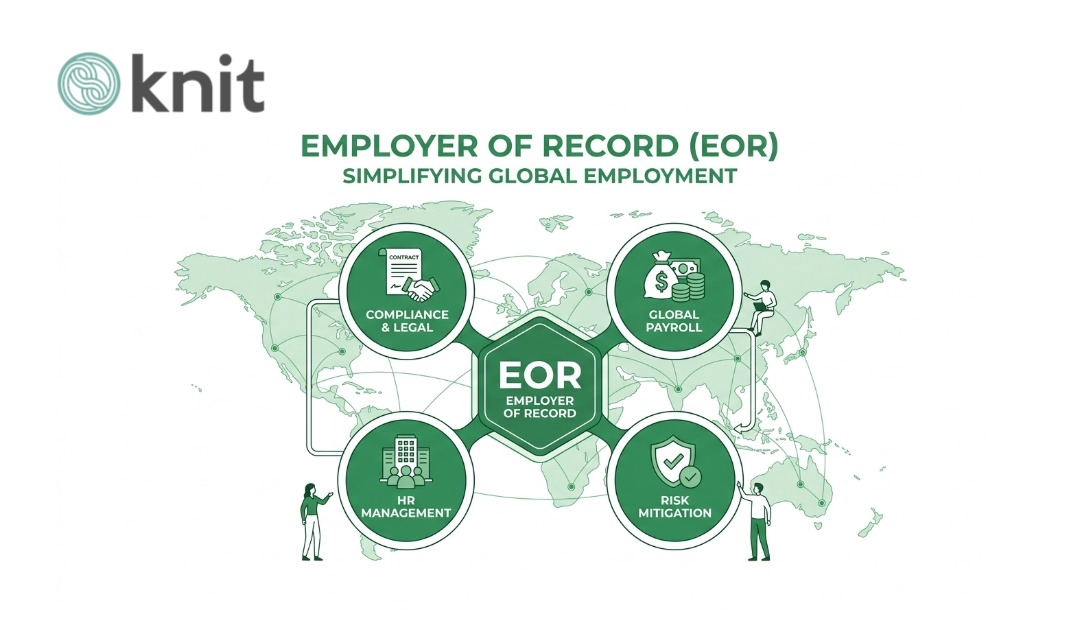
10. How an EOR Can Fit, and the Conditions That Must Be Met
None of the official pages we reviewed mentions Employer of Record services. That silence cuts both ways. It does not say an EOR is prohibited, and it does not say an EOR is approved. The authorities assess the employer named in the application. So the question is whether the entity acting as the local legal employer meets every employer requirement in its own right.
By "EOR" we mean a locally registered entity that employs the worker on the client's behalf, which is the local legal employer. Under that definition, an EOR can fit the EP framework only if all of the following conditions can be met.
- The EOR is itself a Malaysian-registered company that can hold an active ESD account and has completed registration and activation.
- The EOR meets the paid-up capital tier that applies to its ownership structure. A thin, newly formed vehicle may not.
- The EOR's sector profile matches the channel. If the role would fall in the MIDA channel, the employer must hold the relevant sector approval. An EOR entity that does not hold a Manufacturing Licence or MIDA incentive may not be eligible for that route, and the lower RM7,000 manufacturing threshold depends on the employer's sector status. Confirm which route your role needs.
- The EOR is in good standing, meaning tax compliant with LHDN and not on the Immigration Suspect List or Blacklist.
- The employment contract, job description and salary are real and Malaysian. The qualifying basic salary must be paid and taxable in Malaysia, and the contract must be stamped. The EOR payroll must support that.
- The expatriate works only for the named employer. The ESD page says expatriates may work only for the company named on the pass. The way the client directs the work under an EOR structure should therefore be reviewed by local counsel against Malaysian employment and immigration rules before the application is filed.
- The succession plan has an owner. From 1 January 2027, for Categories II and III, someone must be able to describe the local successor and the knowledge transfer steps. An EOR can record and maintain the employment side, but the plan content depends on the client's business and local team. Whether the successor is employed by the client's own entity or by the EOR is a question to settle with the authority.
- The employer can support the Section 60K approval and, where required, the MyFutureJobs advertisement, because these steps attach to the employer and the post.
When the client already has a Malaysian entity. If the client already has a Malaysian entity that meets the requirements, that entity can act as the applicant directly, and the question becomes how much support the application itself needs, such as document preparation, form completion and follow-up with the authorities. Our article on EOR versus entity setup and the real cost math explains how to compare the two routes on cost and timing, and our explainer on what an Employer of Record is covers the model. For Malaysia-specific coverage, see Knit's Employer of Record page for Malaysia.
Where an EOR can help. An EOR can make sense when the hire is needed before an entity exists, when the headcount is small and the Malaysian presence is exploratory, or when the client wants one local legal employer to handle contracts, payroll and statutory filings. In each case, the work visa step is only as strong as the weakest condition above.
A warning about shortcuts. Do not accept any arrangement in which the named employer on the EP is not the party that actually employs, pays and is responsible for the person. If the answer to "Who is the named employer on the application?" is unclear, stop and resolve that before spending on documents. We recommend that the final structure be reviewed by licensed Malaysian counsel.
11. How Knit Supports EOR and Work Visa Hires
Knit People's main offering for this kind of hire is Employer of Record, combined with work visa support. In Knit's own words, the visa part of that work is:
"Knit People supports employers with employee work visa applications, including document preparation, form completion, and communication and follow-up with local authorities, to help employees obtain compliant work authorization under local rules."
That wording is deliberately specific. Knit does not decide approvals, and approval is always decided by the local authority. For which destinations and which pass types Knit's visa support covers, confirm the scope for your destination with the Knit team. Where a Malaysian EOR hire is being planned, Knit's local team can discuss how the employer requirements in Section 10 apply to the role. The related services that may matter for the same project include Global Payroll, entity registration, global tax and insurance, and background checks. Work visa support is also available as a standalone value-add service.
Knit maintains a China operations hub in Shenzhen, which is where Chinese HR teams can start a conversation about a Malaysian plan. To start, the Knit team can be reached through the contact page, and the Employer of Record services page explains the model. The global hiring guides cover other countries on your expansion list.
How Knit People Compares
Three questions matter more than any brand name when you compare providers for a work visa hire.
- Who is the named employer or sponsor on the application? In Malaysia, this must be a registered company that meets the employer requirements.
- What does the provider do during the application? Document lists, form completion, submission, and follow-up are different tasks, and some are done by the provider while others stay with you.
- Who tracks renewals and changes afterward? Renewal dates, category changes under the new salary bands, and the succession plan from 2027 all need an owner.
The table uses only what each provider says on its public pages as of November 2026.
Approval is decided by the local authority whichever provider you choose.
12. Illustrative Scenario and a 2027 Planning Timeline
Illustrative scenario (hypothetical, not a real client). Company C is a mid-sized Chinese technology company that plans to open a small delivery center in Malaysia. It has no Malaysian entity yet. It wants Employee A, a senior engineer, in Kuala Lumpur by early 2027 for a multi-year assignment, and it expects to hire Malaysian engineers around Employee A. The figures below are placeholders.
Company C's first draft package for Employee A is RM11,000 per month in total, made up of RM7,000 in basic salary, RM3,000 in housing allowance and RM1,000 in other allowances. Its human resources lead assumes this puts Employee A in Category II.
A review under the revised policy would run as follows.
- Category. Only basic salary counts, so RM7,000 places Employee A in Category III (RM5,000 to RM9,999), not Category II. The allowances do not move the category. If the Malaysian employer is in a specified manufacturing sector, RM7,000 sits exactly at the lower floor, so there is no margin.
- Succession plan. Category III is subject to the succession plan from 1 January 2027. Company C writes a short plan naming a local engineer as the future owner of the role and describing the training steps and timeline, so it can be adapted when the authority publishes the procedure.
- Employer. Company C compares two routes. It could set up a Malaysian company, which needs registration, ESD activation and the paid-up capital tier. Or it could use an EOR that meets every employer requirement in Section 10 for the first hires, and set up its own entity later. It asks local counsel to review how the structure works with the rule that the expatriate may work only for the named employer.
- Duration. Company C plans renewals around a 60-month horizon and does not assume 10 years, because the sources conflict.
- Travel. Employee A is told not to start work during any visa-free visit. Visits before the pass is issued are limited to listed business purposes, with hands-on work ruled out unless the authority confirms otherwise.
- Dependants. Because Category III applications from 1 June 2026 may include dependants, Company C asks the authority to confirm the current conditions before offering relocation support to Employee A's family.
The point of the scenario is that the category, the employer and the succession plan are decided before the offer letter, not after.
A 2027 planning timeline. The table lists the dates that matter, based on the official sources. It is a planning aid only.
13. Frequently Asked Questions
Q: What is the minimum salary for a Malaysia Employment Pass in 2027?
It depends on the category. Under the revised policy effective 1 June 2026, Category I is RM20,000 and above, Category II is RM10,000 to RM19,999, and Category III is RM5,000 to RM9,999 (RM7,000 to RM9,999 for specific manufacturing sectors). The salary is measured as basic monthly salary only. We did not find a separate set of 2027 thresholds, so confirm with the authority if new figures are announced.
Q: What is the succession plan requirement?
It is a mandatory plan, from 1 January 2027, for Category II and Category III applications. The ESD FAQ describes it as a structured plan to prepare local employees to take over expatriate roles within the employment period. The official pages we reviewed do not specify the format, who files it, or how it is assessed, so confirm those details in writing.
Q: Do existing Employment Pass holders have to reapply?
The ESD FAQ says holders of valid passes do not need to reapply, and passes issued before 1 June 2026 follow the earlier policy until they expire. Renewals submitted on or after 1 June 2026 follow the revised policy. Check each renewal date against the new salary bands in advance.
Q: How long is an Employment Pass valid?
The sources conflict. The ESD Employment Pass page and FAQ refer to up to 60 months, while the policy table and MIDA announcement list 10 years for Categories I and II and 5 years for Category III. Treat the period approved on the actual application as controlling, and plan around 60 months unless the authority confirms otherwise.
Q: Can Chinese nationals work in Malaysia on visa-free entry?
No. The Immigration Department's FAQ on the Malaysia-China visa exemption lists employment as a purpose that requires a visa applied for in advance. Visa-free entry is limited to 30 days per entry and 90 days in any 180-day period, and working without a valid pass can lead to penalties. Ask the authority before any trip that involves hands-on work.
Q: Can an Employer of Record sponsor an Employment Pass in Malaysia?
The official pages we reviewed do not mention EOR, so this depends on the EOR entity. It must be a registered Malaysian company with an active ESD account, the required paid-up capital, any needed sector approval and good standing with the tax and immigration authorities. Have local counsel review the structure before you apply.
Q: Do allowances and bonuses count toward the minimum salary?
No. The policy document says the minimum is based on basic monthly salary that is taxable in Malaysia, and excludes allowances, incentives, bonuses and salary paid outside Malaysia. Design the Malaysian contract so the basic salary alone meets the category you are aiming for. Confirm tax treatment with a Malaysian tax adviser.
Q: What does the application cost?
The MIDA Guidelines for manufacturing and selected services list a MIDA fee of RM2,000 per application plus Immigration Department fees, all excluding 8% SST. The ESD page and guidebook do not list amounts. Fees can change, so confirm the current schedule on ESD Online or with MIDA before budgeting.
Q: Can the employee's family come with them?
The policy document says all three categories may apply for dependants for applications submitted on or after 1 June 2026, which is a change for Category III. It lists a Dependant Pass for a spouse and children under 18, and a Long-Term Social Visit Pass for other family members. The ESD Employment Pass page also mentions a salary level above RM5,000 for family passes, so check the current conditions with the authority.
Q: Does Knit guarantee that a Malaysian work visa will be approved?
No. Approval is always decided by the local authority. Knit People supports employers with employee work visa applications, including document preparation, form completion, and communication and follow-up with local authorities, to help employees obtain compliant work authorization under local rules. Confirm the scope for your destination with the Knit team.
14. Glossary of Key Terms
Employment Pass (EP): The Malaysian work pass for expatriates employed by a company that is eligible to apply. The holder may work only for the company named on the pass.
Expatriate Services Division (ESD): The Immigration Department unit that runs the ESD Online system where employers register and file expatriate applications.
MIDA: The Malaysian Investment Development Authority. It runs a separate EP channel for manufacturing and selected services and publishes announcements on the revised policy.
Revised Expatriate Salary Policy: The policy that took effect on 1 June 2026. It sets three EP categories by minimum basic salary and applies to new and renewal applications from that date.
Basic salary: The fixed monthly salary used for the category test. Under the policy document it must be taxable in Malaysia and excludes allowances, incentives, bonuses and salary paid outside Malaysia.
Succession plan: An employer's structured plan to prepare local employees to take over expatriate roles. Required for Categories II and III from 1 January 2027, with procedures still to be confirmed.
Paid-up capital: The share capital a company has actually received. The ESD sets minimum levels by ownership structure for companies that apply for expatriate passes.
Xpats Gateway: The online system through which sector approvals and agency support letters are obtained for companies under a sector agency, before the EP application.
Section 60K approval: Approval from the labour department under Section 60K of the Employment Act 1955, listed as required for new applications in the MIDA channel.
Key Post and Term Post: The two post types in the MIDA channel. A Key Post is a permanent high-level managerial role, while a Term Post is temporary and aims to transfer know-how to Malaysians.
Employer of Record (EOR): A locally registered entity that employs the worker on the client's behalf, serving as the local legal employer. For an EP, it must itself meet every employer requirement.
Visa exemption: The Malaysia-China arrangement that lets Chinese nationals enter for listed purposes for up to 30 days per entry without a visa. It does not authorize employment.
15. About Knit
Knit People was founded in Canada in 2015 and has about 11 years of experience supporting international employers. It serves 4,000+ clients across 172 countries and regions, processes over USD 600 million in annual payroll, operates 60+ owned entities, and maintains a China operations hub in Shenzhen. Its services include Employer of Record, PEO, Global Payroll and Contractor of Record, along with headhunting and recruitment, background checks, entity registration, global tax, insurance and work visa support. Knit holds MSB license No. M23187879. To discuss your overseas team or a cross-border hiring plan, contact the Knit team or review the Employer of Record services page.
16. Related Reading
- Employer of Record in Malaysia
- Employer of Record Services
- What Is an Employer of Record?
- EOR vs. Entity Setup: The Real Cost Math
- Global Hiring Guides
- Knit People Blog
- Knit People Home
This article is general educational information about Malaysia's Employment Pass framework for employees of Chinese companies. It is not legal, tax or immigration advice. Rules, fees, forms and procedures change, including the succession plan procedures expected from 1 January 2027, and the article reflects public official texts reviewed in November 2026, some of which conflict with each other. Approval of any pass is decided by the Malaysian authorities. Before relying on anything above, confirm the current position with the Immigration Department and MIDA, with Knit's local team, and with licensed Malaysian counsel.