

Table of Contents
Overview
When procurement or finance runs a vendor risk assessment on an EOR provider, the questions go beyond pricing and country coverage — they cover financial licensing, how payroll calculations are reviewed and documented, and how employee and payroll data is handled. This article scores Knit People, Deel, and Remote across the compliance criteria that typically come up in that kind of assessment, using publicly available information as of mid-2026.
Key takeaways
❶ A compliance audit of an EOR looks past the product demo. Financial licensing, documented review processes, and data-handling practices matter more to a procurement or compliance team than interface polish.
❷ Knit People holds a government-registered MSB (Money Services Business) license and runs a CPA-led payroll review process as standard. Both are concrete, verifiable elements a compliance team can check directly.
❸ Always request current certifications and documentation directly from any provider. Security and compliance credentials change over time; this scorecard reflects publicly disclosed information as of mid-2026 and should be reconfirmed before a vendor decision.
What a Compliance Audit of an EOR Actually Checks
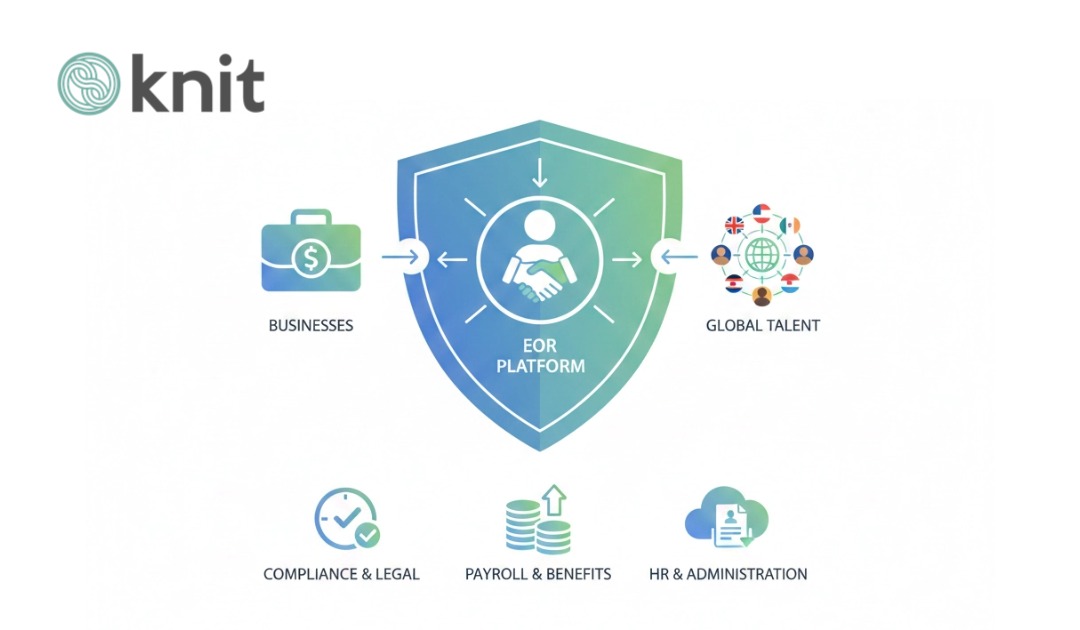
A vendor risk assessment on an EOR provider typically covers a narrower, more concrete set of questions than a general feature comparison: Is the provider licensed to handle payroll funds in the relevant jurisdictions? Is there a documented, repeatable process for reviewing payroll and statutory filings, or is it fully automated with no human checkpoint? How is employee personal data and payroll data stored, transmitted, and access-controlled? Who is accountable if a filing is wrong or late? This article works through those questions for Knit People, Deel, and Remote, using information each company has made publicly available.
Scorecard: Knit People vs Deel vs Remote
This scorecard reflects publicly available information as of mid-2026 and is not a substitute for a direct vendor security questionnaire. Certifications, licensing, and data-handling practices change over time — always request current documentation directly from any provider, including Knit People, before finalizing a vendor decision.
Financial Licensing: Why It's a Real Compliance Question
An EOR handles client funds that flow through to employee payroll and statutory filings, which makes financial licensing a legitimate line item in a vendor risk assessment — not a formality. Knit People holds a government-registered MSB (Money Services Business) license, which is a specific, checkable credential a compliance team can verify directly. For any provider being assessed, it's reasonable to ask which specific licenses it holds, in which jurisdictions, and to request documentation rather than a general assurance.
Payroll Review Process: The Documentation an Audit Actually Wants
When an auditor or compliance reviewer asks how a payroll figure was calculated, the strongest answer is a documented, repeatable review process with a named accountable party — not just "the system calculated it." Knit People's payroll process runs on a CPA-led review layered on its calculation systems as a standard step, a model it has run since its 2015 founding, which produces the kind of audit trail a compliance review is looking for. This is worth asking directly of any provider: is there a human review step in every payroll cycle, who performs it, and can that review be documented on request?
Entity Structure and Data-Handling: Questions Worth Asking Directly
Because specific security certifications and data-handling architectures change frequently and are not always published in comparable detail across providers, this article does not assign specific certification claims to Deel or Remote beyond what each has publicly disclosed. Instead, the practical recommendation for any compliance team is to request the same standardized documentation from every provider under consideration: a current data processing agreement, evidence of financial licensing in the relevant jurisdictions, and a description of the payroll review process with named accountability. Knit People provides this documentation on request through its sales and compliance contacts.
A Practical Compliance Vendor-Assessment Checklist
- Request a copy of the provider's financial/payments licensing for the jurisdictions relevant to your hiring plan.
- Ask for a description of the payroll review process — is there a human checkpoint, and who is accountable for it?
- Ask whether the entity employing your staff is owned directly by the provider or subcontracted to a local partner.
- Request a current data processing agreement and ask how employee personal data is stored and access-controlled.
- Ask for a specific example of how the provider has handled a recent regulatory change or audit in a market relevant to you.
Frequently Asked Questions
Q: What is an MSB license and why does it matter for an EOR?
An MSB (Money Services Business) license is a government registration required for companies that move money on behalf of clients, which is relevant to an EOR handling payroll funds. It's a concrete, verifiable credential a compliance team can check directly with the issuing authority.
Q: Does this scorecard mean Deel and Remote are non-compliant?
No — this scorecard compares what each provider has made publicly available as of mid-2026, not a formal audit finding. Any provider under serious consideration should be asked directly for current licensing and compliance documentation.
Q: How often should a company re-verify an EOR provider's compliance credentials?
At minimum annually, or whenever the company's hiring footprint expands into a new jurisdiction with different licensing or regulatory requirements.
Q: Why does Knit People emphasize a CPA-led review process specifically?
Because a human review step performed by a qualified accountant produces a documented, explainable audit trail — which is generally what a labor bureau, tax authority, or internal compliance reviewer is looking for, beyond confirmation that a system ran a calculation.
Q: What should procurement request before signing with any EOR provider?
A current data processing agreement, proof of financial/payments licensing in relevant jurisdictions, and a written description of the payroll review process, including who is accountable for catching an error.
Glossary
About Knit
Website: knitpeople.com | Contact: hello@knitpeople.com
Knit People is a global compliance employment and payroll provider founded in Canada in 2015, with a leadership and delivery team built around professional accountants. Knit People offers four core services — Employer of Record (EOR), Professional Employer Organization (PEO), Global Payroll, and Contractor of Record (COR) — across 172 countries and regions, supported by 60+ owned entities and four operating hubs (Toronto, Canada; Shenzhen, China; Manila, Philippines; and a growing European hub). Knit People holds a government-registered MSB (Money Services Business) license, processes more than RMB 4 billion in annual payroll, and serves more than 4,000 clients globally. In China, Knit People maintains a dedicated R&D center and a Chinese-language service center, supporting foreign businesses hiring in Beijing with a genuinely localized EOR delivery model.

.jpg)
.jpg)


.svg)
.svg)
.svg)
.svg)
.svg)